
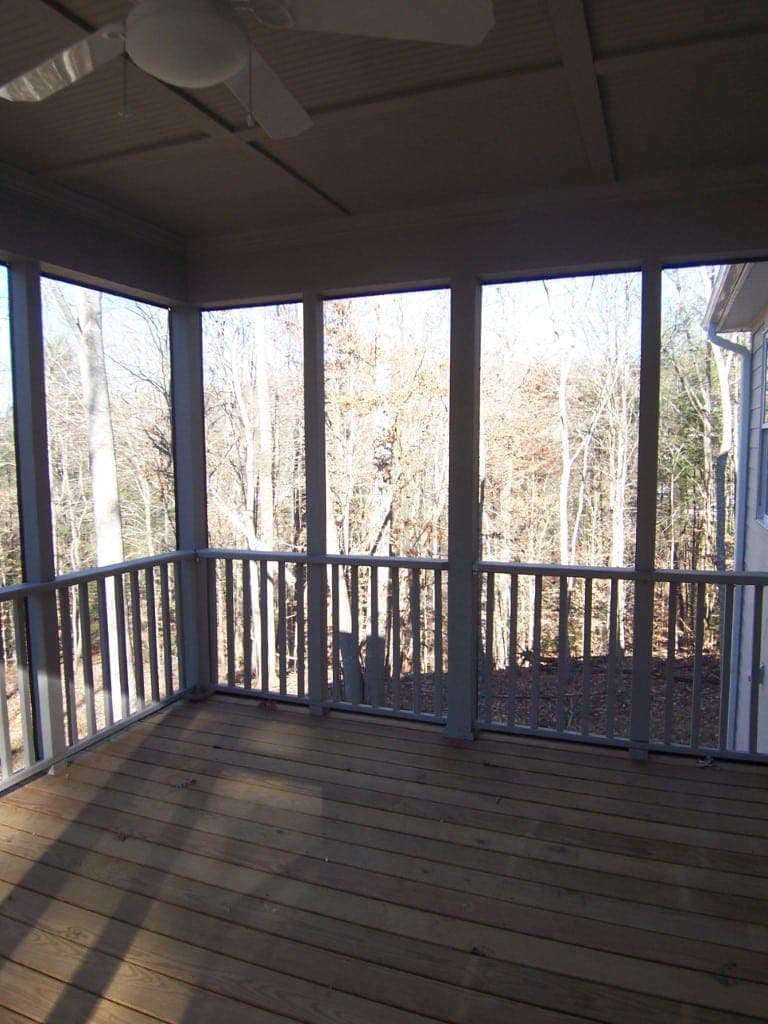
What a New Deck Costs in Western North Carolina
A deck is one of the most popular projects we get asked about in western North Carolina, and for good reason. Between the views, the mild shoulder seasons and how many homes here sit on a slope, a well-built deck can feel like adding a room. It is also one of the projects where the price swings the most, because a deck on flat ground in Hendersonville and a deck hanging off a hillside in north Asheville are very different jobs. Here is how we think about deck costs after 30 years of building in Buncombe, Henderson and Haywood counties.
The short answer: honest ranges
Deck pricing is usually discussed per square foot of finished deck, installed. These are broad ranges, not quotes, and your project could land outside them:
- Pressure-treated lumber deck, simple layout, low to the ground: roughly $35 to $60 per square foot.
- Composite or PVC decking on a treated frame: roughly $55 to $100 or more per square foot.
- Elevated, multi-level or steep-lot decks: often well above those ranges, because the structure underneath can cost as much as the surface you walk on.
Railings, stairs, lighting and a roof or screen enclosure are where many budgets grow. A covered or screened porch is closer to building a small room than a deck, and it should be priced that way. If you are weighing a deck against a sunroom or a true room addition, it is worth looking at our home additions and expansion work to compare what each option gets you.
What moves the price in western NC
Terrain and height
This is the biggest local factor. Many lots around Asheville, Black Mountain and Weaverville fall away sharply behind the house. A deck that is 3 feet off the ground on one end and 14 feet on the other needs taller posts, bigger footings, more bracing and often engineering. Crews also work slower on a slope, and materials sometimes have to be carried down a steep side yard by hand.
Footings and soil
Western NC soils range from red clay to rock that shows up a foot down. Footings have to sit below the frost line on undisturbed soil, and hitting rock can mean extra excavation or a change in footing design. We do not know exactly what is under a yard until we dig, so a good estimate builds in some room for it.
Decking material
Pressure-treated pine costs the least up front but needs cleaning and sealing every few years, and our humid summers and shaded, north-facing lots are hard on it. Composite and PVC cost more but hold up better to moisture and mildew with less upkeep. Hardwoods like ipe are beautiful but expensive and slow to install. The framing underneath is usually treated lumber either way, so the material choice mostly changes the surface and the railings.
Railings and stairs
Code requires guards on most decks more than 30 inches above grade, and on a sloped lot that is nearly every deck. Wood railings are the least expensive; aluminum, cable and glass systems can cost several times as much per linear foot. Long runs of stairs down a hillside add up quickly too.
Attachment to an older house
Much of the housing stock in Asheville and the surrounding towns is decades old. Before we attach a ledger board, we need to know what it is fastening into. Rotted rim joists, missing flashing and old decks nailed on instead of bolted are common finds. Sometimes the right answer is a freestanding deck; sometimes it is repairing the house first. Either way, it is cheaper to plan for it than to discover it mid-project.
Replacing versus building new
Tearing out an old deck adds demolition and disposal cost. Resurfacing can save money if the framing is sound, but on many older decks the framing is the problem.
Labor and scheduling
Skilled carpenters are in high demand here, especially in spring. Planning in fall or winter often gives you more scheduling flexibility.
Permits and inspections
Most decks need a building permit, especially if they are attached to the house, elevated, or have a roof. Which office you deal with depends on the address. Inside city limits, that is the City of Asheville. Elsewhere in the county, it is Buncombe County Permits and Inspections. In Henderson or Haywood County, or towns with their own departments, the local jurisdiction handles it. Fees and timelines vary by jurisdiction and project, so we check with the right office early rather than assuming. Steep-lot decks may also need engineering, and some neighborhoods add HOA review.
Skipping the permit can cause trouble when you sell, and inspections focus on footings, connections and guardrails, which is where decks fail.
How to get the most for your budget
- Keep the shape simple. Rectangles are faster to frame and waste less material than angles and curves.
- Spend on the structure first. You can upgrade lighting or furniture later. Footings, flashing and connections are hard to fix after the fact.
- Be realistic about height. If you can step the deck down closer to grade, the savings on posts, bracing and railings can be significant.
- Think about maintenance honestly. If you do not want to seal a deck every few years, composite may cost less over time than its price suggests.
A deck often becomes part of a bigger conversation, like a new door off the kitchen, which is where our remodeling services come in.
Thinking about a deck?
Every lot in the mountains is a little different, and the best way to get a real number is to have someone walk the site, look at the slope and the house, and talk through what you want. If you are planning a new deck or replacing an old one, reach out and we will be glad to put together an estimate.
Ready to start your project?
Get in Touch