
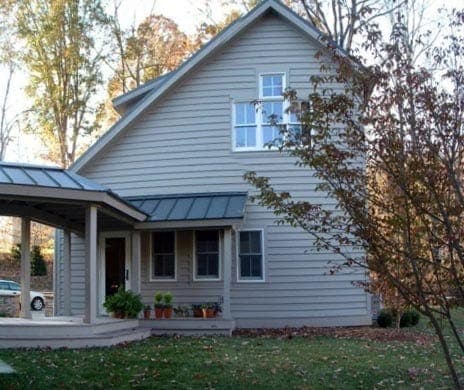
What It Costs to Build an ADU in Western North Carolina
More homeowners around Asheville are asking us about accessory dwelling units, and the reasons are usually practical: a parent who needs to live closer, grown kids who can't find anything affordable, a quiet place to work, or a long-term rental that helps carry the mortgage. The first question is always the same: what does it cost? The honest answer is a range, and where your project lands depends far more on your lot and your jurisdiction than on the floor plan.
Three kinds of ADU, three price tiers
Not every ADU is a cottage in the backyard. In western North Carolina we see three main types, and each carries a different cost profile.
Interior or garage conversions are usually the least expensive path because the foundation, roof and much of the shell already exist. Converting a basement or attached garage into a legal unit commonly runs somewhere in the range of $60,000 to $150,000. The low end assumes a dry, sound space with plumbing nearby. The high end comes from adding egress windows, raising ceilings, waterproofing a damp basement, or running new sewer lines a long way.
Attached ADUs are built onto the house, like an addition with its own entrance and kitchen. These often fall between $150,000 and $275,000 or more, depending on size and how hard the tie-in to the existing roof and foundation turns out to be. If you're weighing this route, it helps to look at how we approach home additions and ADUs, because the structural questions are much the same.
Detached ADUs are new, freestanding buildings. They cost the most per square foot because you're paying for a full foundation, roof, utilities and finish package on a small footprint. A detached unit commonly lands somewhere between $250 and $400-plus per square foot, so a modest 600-square-foot cottage can run from the high $100,000s into the $300,000s once site work is included.
Why small buildings cost more per square foot
People are often surprised that a 600-square-foot ADU doesn't cost half of what a 1,200-square-foot house does. The expensive parts of any home are the kitchen, the bathroom, the mechanical systems and the foundation, and an ADU still needs every one of them. Those fixed costs get spread over fewer square feet.
The site factors that move the number
In our mountains, site conditions can swing an ADU budget more than any finish choice.
- Slope. A flat backyard is the exception here. A sloped site may need a stepped or walkout foundation, retaining walls and careful drainage, all of which add real cost.
- Sewer or septic. On city sewer, the question is how far the new line has to run and whether it can drain by gravity. On septic, the county environmental health office has to confirm your system can handle another bedroom's worth of flow. If it can't, a septic expansion or repair becomes part of the project.
- Water and power. Tying into a public water line is different from sharing a well. Some utilities will require a separate meter.
- Access. Narrow driveways, steep lots and tight backyards slow delivery and make equipment harder to get in, which affects labor time.
- Older main houses. In older neighborhoods, an attached ADU or conversion can uncover outdated wiring, undersized electrical service or framing that needs attention before the new work can tie in.
Know which rules apply to your address
ADU rules are local, and one of the most common mistakes is assuming the rules you read about online apply to your lot.
If you're building in the Asheville area within city limits, the City of Asheville handles zoning and permitting. Standard ADUs there can now be up to 1,000 square feet, up from 800 square feet as of August 2026, and the ADU must be smaller than the main house. Within the city, a detached ADU in a residential zone cannot be used as a short-term rental, so plan around long-term uses.
Outside the city, the rules change. Buncombe County, Henderson County, Haywood County and towns such as Weaverville, Black Mountain and Hendersonville each set their own requirements for size, setbacks, parking and whether an ADU is allowed in your zoning district at all. Don't apply Asheville's size cap to a lot in the county or another town. We confirm the rules, fees and review process for the specific address before we price anything, because a setback or size limit can change the design entirely.
Finish level and design choices
Once the site is understood, finishes are the next lever. A simple rectangular footprint with a single roofline, stock cabinets and a straightforward bathroom keeps costs controlled. Vaulted ceilings, custom cabinetry, a full-size kitchen and porches add to the budget. If the ADU is for an aging parent, it's worth planning for a curbless shower, wider doorways and a no-step entry now, since retrofitting those later costs more than building them in.
Labor and scheduling in WNC
Skilled trades in our region stay busy, and rebuilding after Helene has added demand. That affects scheduling more than anything else. Realistic planning means allowing time for design, permitting and trade availability rather than expecting a crew to start next month.
How to get a reliable number
The most useful step is a site visit. Walking the lot tells us more about cost than any square-foot estimate: where utilities are, how the land falls, what the existing house looks like and which jurisdiction you're in. From there we can give you a realistic range and show you which decisions will move it most.
If you're thinking about an ADU for family, a home office or long-term rental income, we'd be glad to walk your property and talk through it. Reach out for an estimate and we'll help you figure out what makes sense for your lot.
Ready to start your project?
Get in Touch